

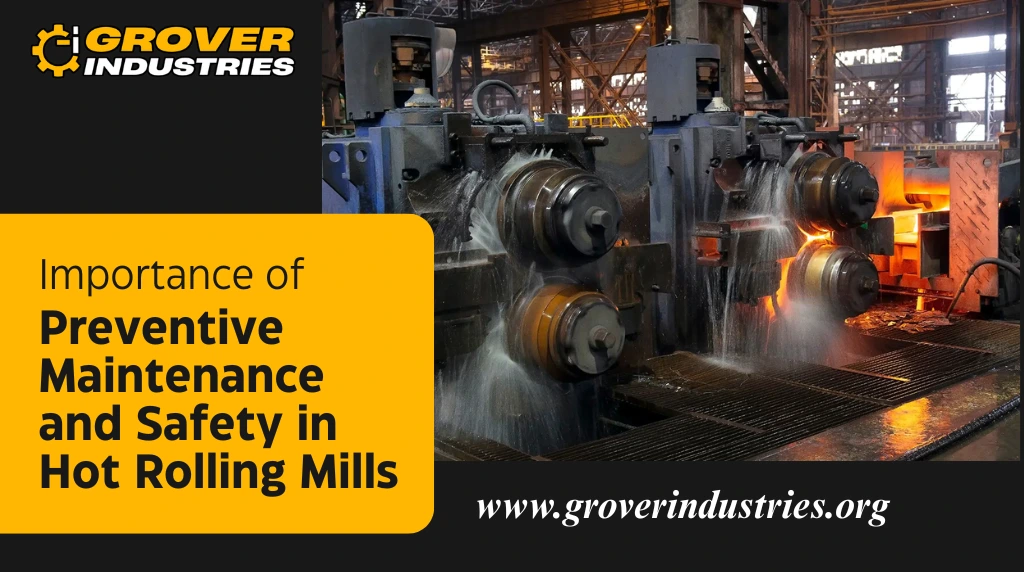
Importance of Preventive Maintenance and Safety in Hot Rolling Mills
In the dynamic world of metal processing, hot rolling mills are indispensable assets. These rugged machines transform raw metal into structural components like bars, beams, rods, and sheets — forming the backbone of industries ranging from construction to automotive manufacturing. However, the performance, longevity, and safety of these heavy machines hinge on two critical pillars: preventive maintenance and robust safety protocols.
As a trusted Rolling Mill Machinery Manufacturer and Supplier in Uttar Pradesh India, Grover Industries knows firsthand that preventive maintenance and safety are not just operational necessities — they are strategic imperatives that safeguard productivity, reduce costs, and protect human lives.
What is Preventive Maintenance in Hot Rolling Mills?:
Preventive maintenance refers to the systematic scheduling of inspections, servicing, and repairs before equipment problems escalate into failures. It’s a proactive approach that anticipates wear and tear, identifies potential faults early, and ensures that rolling mill components remain in optimal condition.
Why Preventive Maintenance Matters:
Whether you are processing wood and recycled pulp for writing paper or producing heavier grades for packaging, the performance of your machines — refiners, screens, stock preparation units, calendering systems, and winding machines — determines product quality and operational economics.
- Improves Equipment Reliability: Hot rolling mills operate under extreme pressure and temperature. Components like rolls, bearings, drive systems, and lubrication circuits are constantly stressed. Regular preventive maintenance helps keep these components in top shape, reducing unexpected breakdowns that lead to costly downtime.
- Boosts Operational Efficiency: Well-maintained rolling mills run smoother, with fewer glitches and interruptions. This leads to consistent throughput, better surface finish on products, and fewer defects — translating directly into higher plant productivity.
- Extends Service Life of Machinery: Just like any mechanical system, the longevity of rolling mill equipment depends heavily on how well it’s cared for. Periodic lubrication, alignment checks, and component replacements can extend the usable life of your mill — protecting your capital investment over the long term.
Common Preventive Maintenance Practices:
- Lubrication and Cooling: The rolls and bearings in hot rolling mills generate significant friction and heat. Regular lubrication minimizes wear, and effective cooling systems prevent thermal damage to contact surfaces.
- Roll Inspection and Alignment: Rolls are the heart of the rolling mill. Periodic checks for cracks, worn surfaces, or misalignment help ensure product quality and prevent premature failures.
- Machine Cleaning: Removing debris, metal scale, and oil residues improves machine performance and reduces fire hazards. Routine cleaning also improves visibility during inspection and maintenance.
- Fastener and Component Checks: Loose bolts, worn gears, or degraded electrical connections can compromise safety and performance. Tightening fasteners and repairing electrical defects are standard elements of preventive upkeep.
- Condition Monitoring: Advanced mills increasingly use condition monitoring systems — vibration sensors, temperature tracking, and real-time data — to catch emerging issues early. Scheduled maintenance based on machine health reduces inefficiencies and unscheduled stoppages.
The Critical Role of Safety in Hot Rolling Mills:
While preventive maintenance protects the machine, safety measures protect the people who operate it. Hot rolling mills are complex systems with moving parts, extremely high temperatures, heavy loads, and electrical systems — all of which pose significant risks.
Safety is non-negotiable. Neglecting safety protocols can lead to severe injuries, lost man-hours, regulatory penalties, and reputational damage. This is why Grover Industries places worker safety at the heart of its operational ethos.
Key Safety Practices Every Rolling Mill Should Adopt:
- Training and Skill Development: Operators and maintenance crews must be trained on standard operating procedures, risk awareness, emergency shutdown protocols, and machine handling. Regular refresher courses help keep skills sharp.
- Personal Protective Equipment (PPE): Working near hot surfaces and heavy machinery requires industry-standard PPE — helmets, gloves, heat-resistant boots, eye protection, and ear protection. Proper use and regular inspection of PPE guard against burns, noise-induced hearing damage, and physical injuries.
- Machine Guards and Emergency Stops: Physical barriers and guards around moving parts prevent accidental contact. Emergency stop buttons and interlocks help quickly shut down operations in the event of a hazard.
- Lockout/Tagout Procedures: Prior to maintenance work, mills should implement lockout/tagout (LOTO) protocols that isolate the machine from power sources. This prevents accidental energisation of systems during servicing and inspection.
- Fire Safety and Ventilation: Given the high-temperature processes involved, fire suppression systems, smoke detectors, and well-planned ventilation are essential. These reduce heat-related risks and remove harmful fumes or smoke from work areas.
- Emergency Preparedness: An effective emergency response plan — with clear evacuation routes, first-aid stations, and trained responders — ensures the best possible outcome in crisis situations.
How Preventive Maintenance and Safety Work Together:
Preventive maintenance and safety are interlinked:
- Well-maintained equipment is safer: fewer malfunctions mean fewer chances of accidents.
- Safety protocols prolong machine life: by minimising misuse and reducing hazardous operation conditions.
- Combined training on both safety and maintenance: enhances worker confidence, reduces human error, and boosts morale.
Together, they build a culture of responsibility that ultimately improves productivity, reduces insurance costs, and strengthens regulatory compliance.
Conclusion:
As a renowned Rolling Mill Manufacturer and Supplier in Ghaziabad Uttar Pradesh India, Grover Industries doesn’t just build high-performance hot rolling mills — we engineer solutions that are durable, safe, and reliable for long-term industrial use. Our deep technical expertise, precision engineering, and commitment to quality have made us a preferred Rolling Mill Machinery Manufacturer and Supplier in Uttar Pradesh India.
We incorporate industry best practices in design, choose high-grade materials, and support our clients with maintenance guidance so that your mill performs optimally throughout its service life.
FAQs:
1. What is preventive maintenance in hot rolling mills?
Preventive maintenance refers to the proactive inspection, servicing, and repair of mill components to prevent breakdowns and ensure consistent performance.
2. How often should a hot rolling mill be maintained?
Maintenance frequencies vary per component but typically include daily visual checks, weekly lubrication and cleaning, monthly detailed inspections, and scheduled annual overhauls.
3. Why is safety important in rolling mill operations?
Hot rolling mills operate at high temperatures with heavy machinery, which poses significant risks like burns, mechanical injuries, and electrical hazards. Safety measures protect workers and reduce accident rates.
4. What PPE is necessary for rolling mill workers?
Essential PPE includes safety helmets, heat-resistant gloves, protective footwear, goggles, face shields, and hearing protection.
5. How does maintenance improve efficiency?
Regular maintenance reduces friction, prevents component failures, and ensures machines operate smoothly — leading to higher throughput and better product quality.
6. Can safety and maintenance reduce costs?
Yes — by preventing unplanned downtime, extending equipment life, and minimising accident-related expenses, both safety and maintenance lead to significant long-term cost savings.