

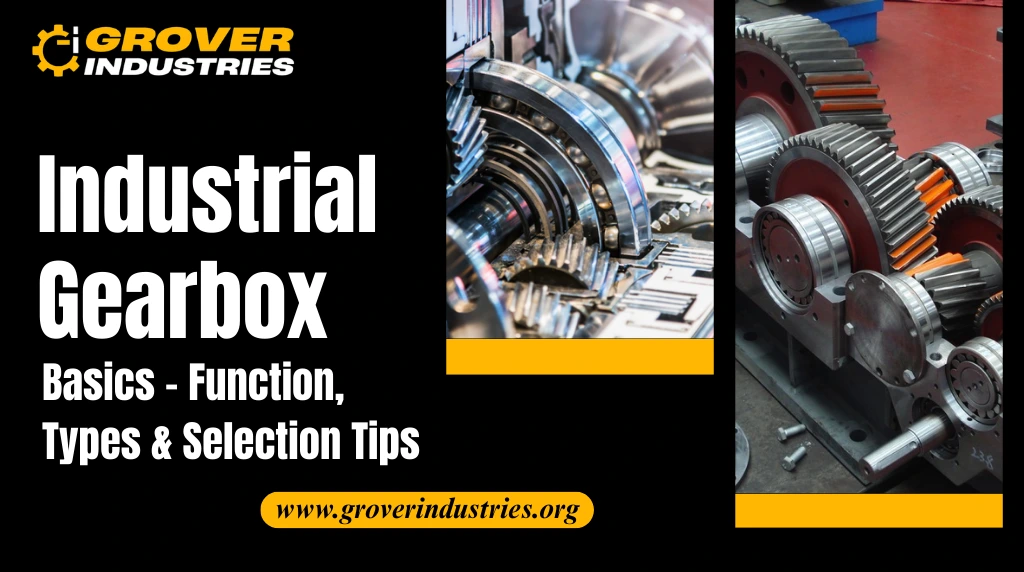
Industrial Gearbox Basics - Function, Types & Selection Tips
In today’s fast-paced industrial world, precision, durability, and efficiency are critical to maintaining competitive operations. Among the many components that ensure smooth machinery performance, industrial gearboxes are one of the unsung heroes. As a leading Industrial Gearbox Manufacturer and Supplier in Ghaziabad Uttar Pradesh India, Grover Industries has been at the forefront of designing, engineering, and supplying high-quality gearboxes that meet diverse industry needs.
Whether you are new to industrial machinery or seeking to optimize your setup, understanding the basics of industrial gearboxes—including their function, types, and selection tips—will help you make informed decisions that directly impact productivity and operational reliability.
What is an Industrial Gearbox?:
An industrial gearbox is a mechanical device designed to transfer power from one component to another while controlling speed and torque. Gearboxes are integral parts of many machines, including conveyor systems, mixers, crushers, and heavy-duty manufacturing equipment.
At Grover Industries, our gearboxes are meticulously engineered to efficiently transmit power under various load conditions while minimizing energy losses. As a trusted Industrial Gearbox Manufacturer and Supplier in Uttar Pradesh India we understand the critical role each gearbox plays in industrial performance.
Understanding the Function of an Industrial Gearbox:
Industrial gearboxes serve three essential functions:
- Speed Regulation: Gearboxes adjust the speed of machinery by altering the rotational speed coming from the driving source (typically an electric motor). By using different gear ratios, the gearbox can increase torque while reducing output speed—or vice versa.
- Torque Amplification: Torque represents the force that causes rotation. Many industrial processes require high torque at low speeds. A gearbox ensures that machines receive optimum torque according to operational demands.
- Direction Modification: Some gearboxes are designed to change the direction of rotation. This feature is particularly useful in complex industrial applications where movement needs to be redirected without changing the motor orientation.
These functions are achieved through carefully designed gear arrangements that match the specific requirements of the machine and the operational environment.
Types of Industrial Gearboxes:
Industrial gearboxes come in several configurations, each suited for particular applications. The most common types include:
1. Helical Gearbox:
Helical gearboxes are widely used in industrial applications due to their efficiency and smooth performance. The gear teeth are cut at an angle, which allows for gradual engagement and less noise.
Ideal for: Conveyors, compressors, and heavy load applications.
2. Worm Gearbox:
Worm gearboxes use a worm (screw) and worm wheel combination, providing high reduction ratios in a compact design. These gearboxes are ideal where space constraints are a concern.
Ideal for: Lifts, elevators, and heavy equipment with high torque demands.
3. Planetary Gearbox:
Planetary gearboxes feature a central sun gear surrounded by planet gears, all contained in a ring gear. This arrangement allows for high torque and compact design.
Ideal for: Robotics, precision machinery, and automated systems.
4. Bevel Gearbox:
Bevel gearboxes use conically shaped gears to change the direction of a shaft’s rotation. They are widely used where angular motion is required.
Ideal for: Automotive systems, power tools, and industrial mixers.
5. Spur Gearbox:
Spur gearboxes are the most basic type, consisting of straight-cut gears that offer reliability and simplicity. They are cost-effective and easy to maintain.
Ideal for: General machinery, packaging equipment, and light-to-medium duty applications.
Each type of gearbox serves a specific purpose, and choosing the right one depends on the performance requirements of the machine and the environment in which it operates.
Key Factors to Consider When Selecting an Industrial Gearbox:
Choosing the correct gearbox can make a significant difference in the operational efficiency, lifespan, and maintenance costs of industrial equipment. Here are essential factors to consider:
- Load and Torque Requirements: Understanding the load the gearbox must handle is vital. Overloading a gearbox can lead to premature wear and failure. Always choose a gearbox that can handle peak torque demands with a safety margin.
- Gear Ratio: The gear ratio determines how much the output speed will change relative to the input speed. Selecting the correct ratio ensures machines operate at optimal speeds without overworking the motor or gearbox.
- Operating Environment: Dust, moisture, temperature extremes, and corrosive conditions all influence gearbox performance. Choose materials and protections (such as seals and coatings) appropriate to the environment. At Grover Industries, our gearboxes are designed to withstand varied industrial conditions across sectors.
- Mounting and Space Limitations: Mechanical constraints may limit the size and type of gearbox you can install. Measuring available space and considering mounting arrangements early in the process is essential.
- Efficiency and Maintenance Needs: A gearbox with higher efficiency translates to less energy loss and improved performance. Additionally, factors like lubrication type, ease of part replacement, and maintenance frequency should influence your decision.
- Compliance and Quality Standards: Industrial gearboxes must meet quality and safety standards that align with international benchmarks. As a reputable Industrial Gearbox Manufacturer and Supplier in Ghaziabad Uttar Pradesh India, Grover Industries adheres to stringent manufacturing protocols to ensure reliability and durability.
Why Choose Grover Industries as Your Gearbox Partner:
Selecting the right supplier is just as crucial as choosing the right gearbox. Here’s why Grover Industries stands out:
- Trusted Manufacturer & Supplier: As a premier Industrial Gearbox Manufacturer and Supplier in Uttar Pradesh India, we combine deep industry expertise with precision engineering to produce gearboxes that deliver performance, longevity, and value.
- Customized Solutions: No two industries are the same. We offer tailored gearbox solutions that meet specific operational requirements, whether you need high torque, compact design, or specialized materials.
- Quality Assurance: From raw material selection to final inspection, each unit manufactured at Grover Industries undergoes rigorous quality testing to ensure peak performance under real-world conditions.
- After-Sales Support: Our commitment to customers extends beyond delivery. With dedicated support services, we ensure seamless integration, maintenance guidance, and long-term satisfaction.
Conclusion:
Industrial gearboxes are fundamental to mechanical power transmission, helping machines deliver controlled speed and torque with precision. Whether your application demands heavy-duty performance, compact design, or specialized functionality, understanding gearbox basics is the first step toward making the right choice.
As a trusted Industrial Gearbox Manufacturer and Supplier in Ghaziabad Uttar Pradesh India, Grover Industries continues to empower industries with reliable, high-performance gearbox solutions tailored to modern industrial needs.
FAQs:
1. What is the primary purpose of an industrial gearbox?
An industrial gearbox primarily serves to adjust the speed and torque between a driving source like an electric motor and the driven equipment, ensuring optimal performance and efficiency.
2. How do I choose the right type of gearbox for my machine?
Consider factors such as torque requirements, gear ratio, operating environment, space limits, and maintenance needs. A professional consultation with an experienced manufacturer like Grover Industries can help refine your choice.
3. What industries commonly use industrial gearboxes?
Industrial gearboxes are used across sectors like manufacturing, mining, automotive, materials handling, food processing, and construction machinery.
4. How does the ‘gear ratio’ affect performance?
The gear ratio influences the balance between output speed and torque. A higher ratio increases torque while reducing speed, and a lower ratio does the opposite.
5. How important is regular maintenance for gearboxes?
Regular maintenance is vital for long-term performance. Proper lubrication, routine inspections, and timely repairs prevent wear and ensure efficient operation.
6. Can gearboxes be customized for specific industrial needs?
Yes. Customization allows gearboxes to meet unique operational demands. At Grover Industries, tailored solutions are designed to match specific application requirements.